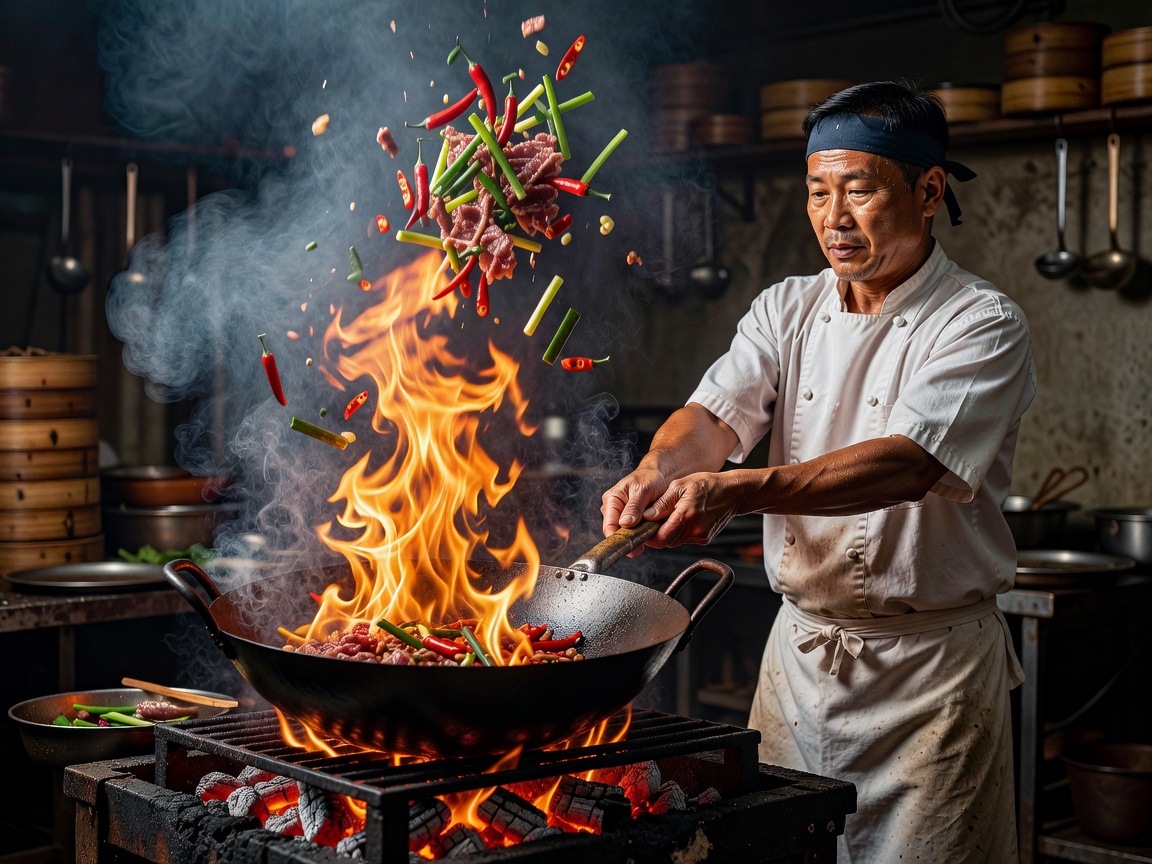
In Cantonese street food gastronomy, no phrase carries more reverence than Wok Hei (wok hei: 鑊氣), literally translated as the "Breath of the Wok." It refers to the signature smoky, charred aroma and rapid-caramelized complex flavor profile achieved only through high-heat wok cooking.
The Thermal Dynamics of Carbon Steel
Standard home stovetops generate between 7,000 to 12,000 BTUs of thermal energy. In contrast, commercial street food wok burners blast jet-like flames exceeding 100,000 BTUs. When paired with thin, hand-hammered carbon steel woks, heat transfers almost instantaneously into ingredients.
Three Chemical Reactions Behind Wok Hei
Food scientists break down the chemistry of wok hei into three key chemical phenomena:
- Maillard Browning: Amino acids and reducing sugars react rapidly at temperatures above 300°F (150°C), producing complex savory taste compounds.
- Pyrolysis of Oil Droplets: As the chef toss ingredients into the air, aerosolized droplets of cooking oil pass directly through the open flame column, partially combusting and creating smoky aldehydes.
- Caramelization: Natural sugars in onions, garlic, and soy sauce rapidly dehydrate and brown along the superheated carbon steel boundary layer.
Rhythm, Motion, and Seasoning
True wok mastery requires rhythmic toss movements that keep food airborne for up to 60% of cooking time. This continuous tossing prevents burning while allowing moisture to flash evaporate, preventing soggy stir-fries and sealing in crisp textures.