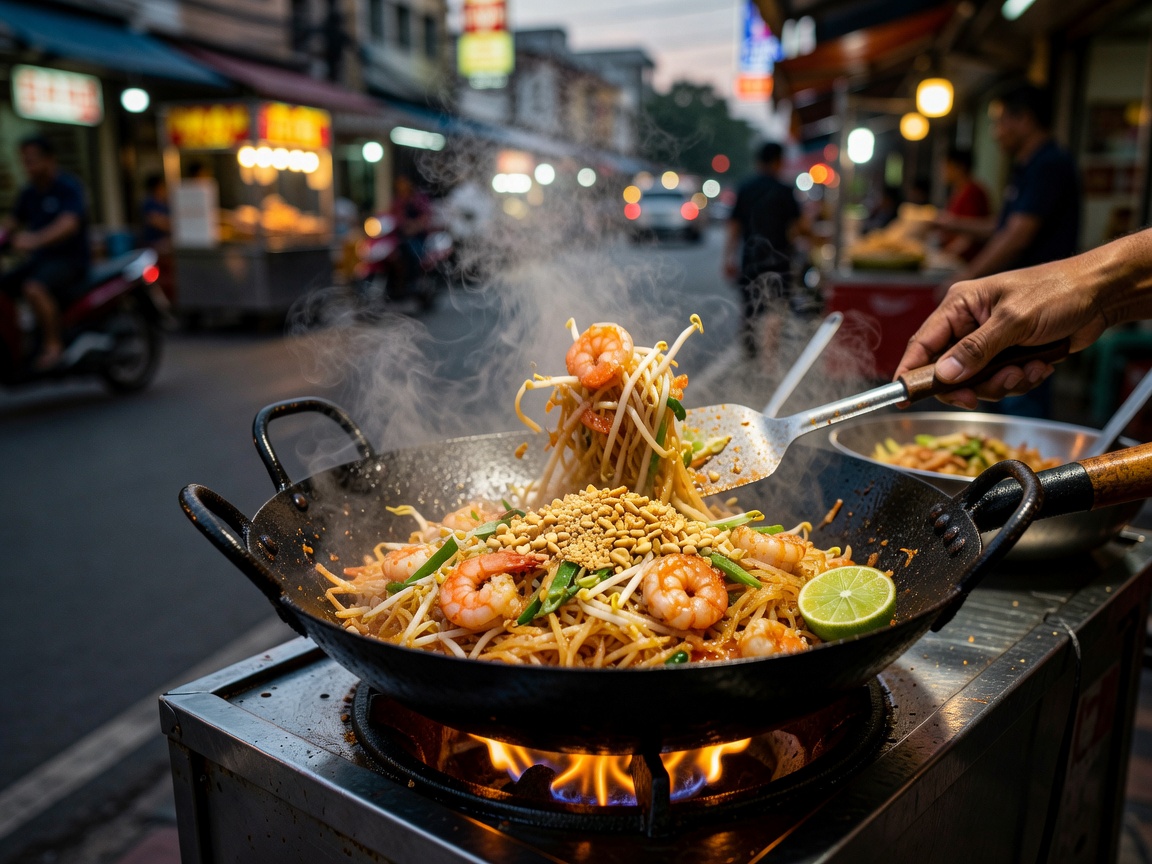
Walk down Yaowarat Road in Bangkok's Chinatown at 9 PM and you will hear the rhythmic clinking of heavy iron spatulas striking roaring woks. This sound signals the birth of authentic Pad Thai—a dish designed by government decree in the 1930s that grew into an icon of world street cuisine.
The Nation-Building Dish
Unlike many centuries-old culinary traditions, Pad Thai was strategically introduced by Prime Minister Plaek Phibunsongkhram to foster national identity and reduce domestic rice consumption during WWII. By encouraging citizens to consume rice noodles instead, street carts proliferated across every alley in Thailand.
The Wok Hei Factor
While western restaurant versions often resemble sweet ketchup-drenched noodles, street stall Pad Thai relies on high-heat combustion to achieve wok hei ("breath of the wok")—an essential smoky charred flavor imparted from roaring carbon flames.
Authentic Flavor Architecture
- Tamarind Paste: Pure sour tamarind pulp boiled with palm sugar and fish sauce creates the true sweet-sour amber reduction.
- Dried Shrimp & Salted Radish: Adds a savory seafood punch and crunch to the chewy rice noodles.
- Yellow Tofu & Fresh Eggs: Scrambled directly against the wok wall, wrapping around individual noodle strands.
- Fresh Side Platter: Served with raw banana blossom, garlic chives, crushed roasted peanuts, and a squeezed lime wedge.