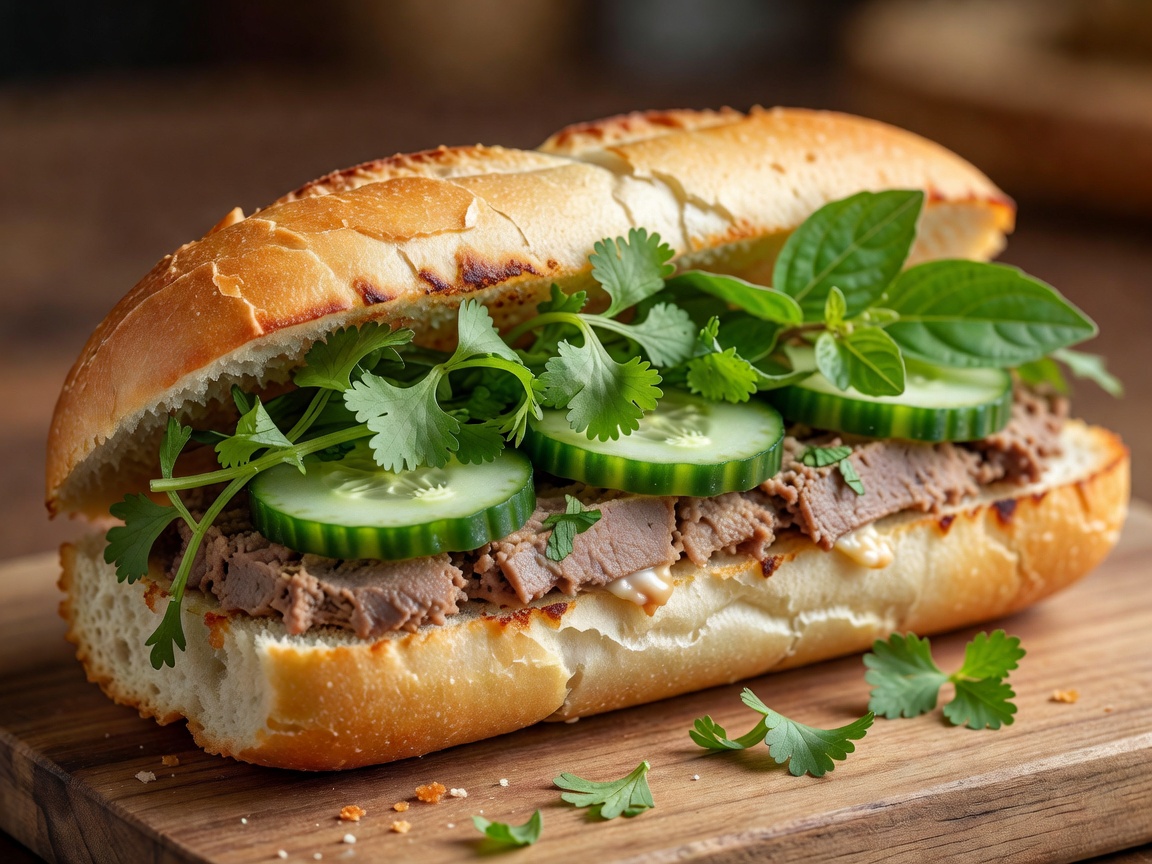
Few dishes tell a story of cultural transformation as vividly as Bánh Mì. Born out of French colonial influence in 19th-century Vietnam, local vendors radically reimagined heavy European cold cuts and dense baguettes into a light, crispy, herb-packed street food masterpiece.
The Evolution of the Vietnamese Baguette
Traditional French baguettes were heavy and expensive, baked exclusively for European colonial elites. However, by introducing rice flour into the wheat dough mix, Vietnamese bakers created a uniquely light, airy interior enclosed in a razor-thin, shattering crisp crust.
Instead of serving butter and liver pâté separately on a plate, street vendors in Saigon during the late 1950s began stuffing these airy rolls with savory meats, fresh herbs, pickled vegetables, and umami-rich sauces for fast, portable urban dining.
The Essential Textural Layers
What sets Bánh Mì apart from any standard sandwich is its strict contrast of hot and cold, savory and acidic, soft and crunchy:
- Pâté & Mayonnaise: Smooth pork liver pâté and house-made egg yolk mayonnaise spread directly into the warm bread cavity.
- Proteins: Sliced char siu pork, steamed pork roll (chả lụa), grilled lemongrass pork belly, or fried eggs.
- Pickled Vegetables (Đồ Chua): Shredded daikon radish and carrots quick-pickled in sugar and rice vinegar for sharp acidity.
- Fresh Aromatics: Thick cucumber spears, fresh cilantro stems, and slices of fiery bird's eye chilies.
- Finishing Touch: A splash of Maggi liquid seasoning or garlic-soy sauce.